Zenith El Primero A386 1969
El Primero · A386
- Case
- 38 mm
- Crystal
- Acrylic
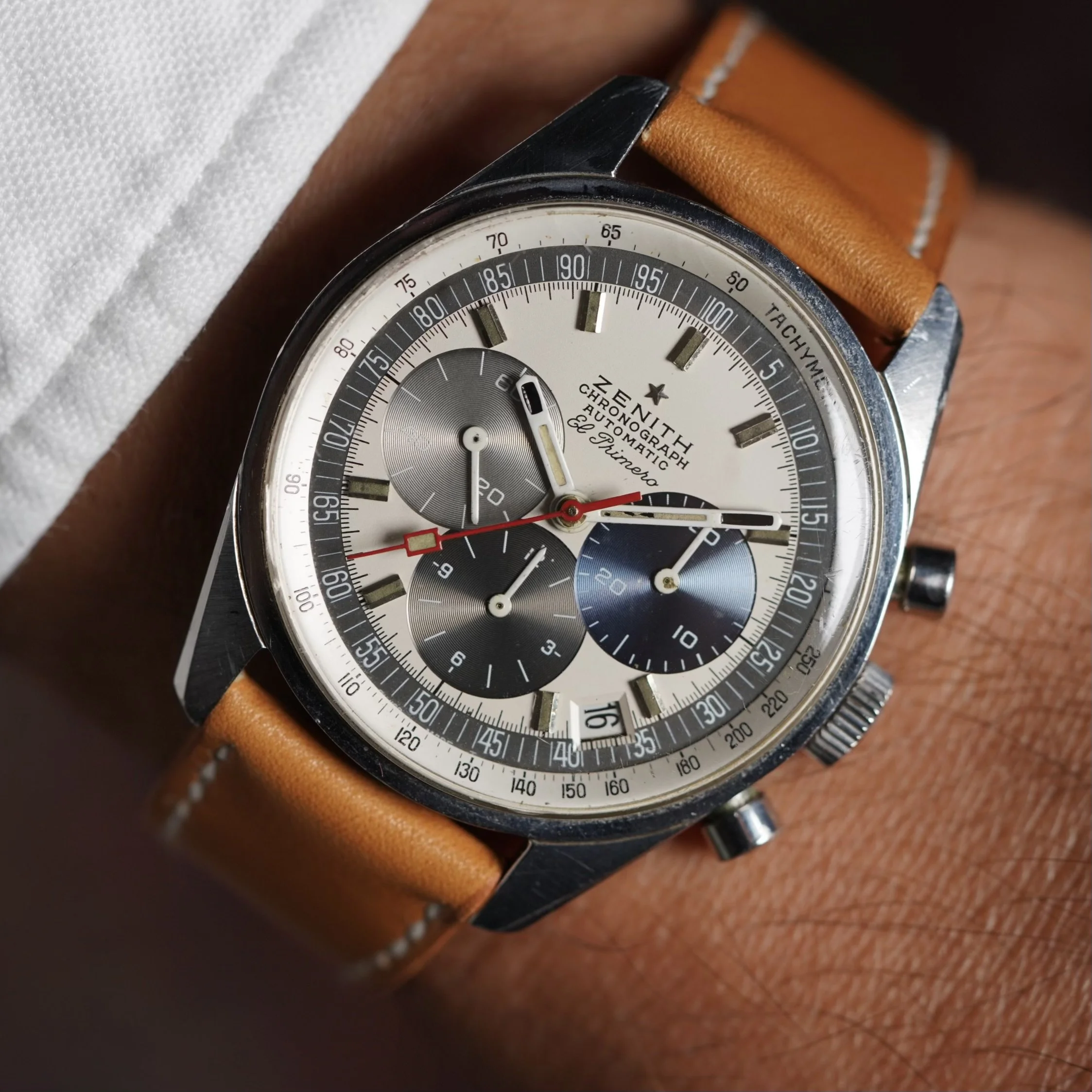
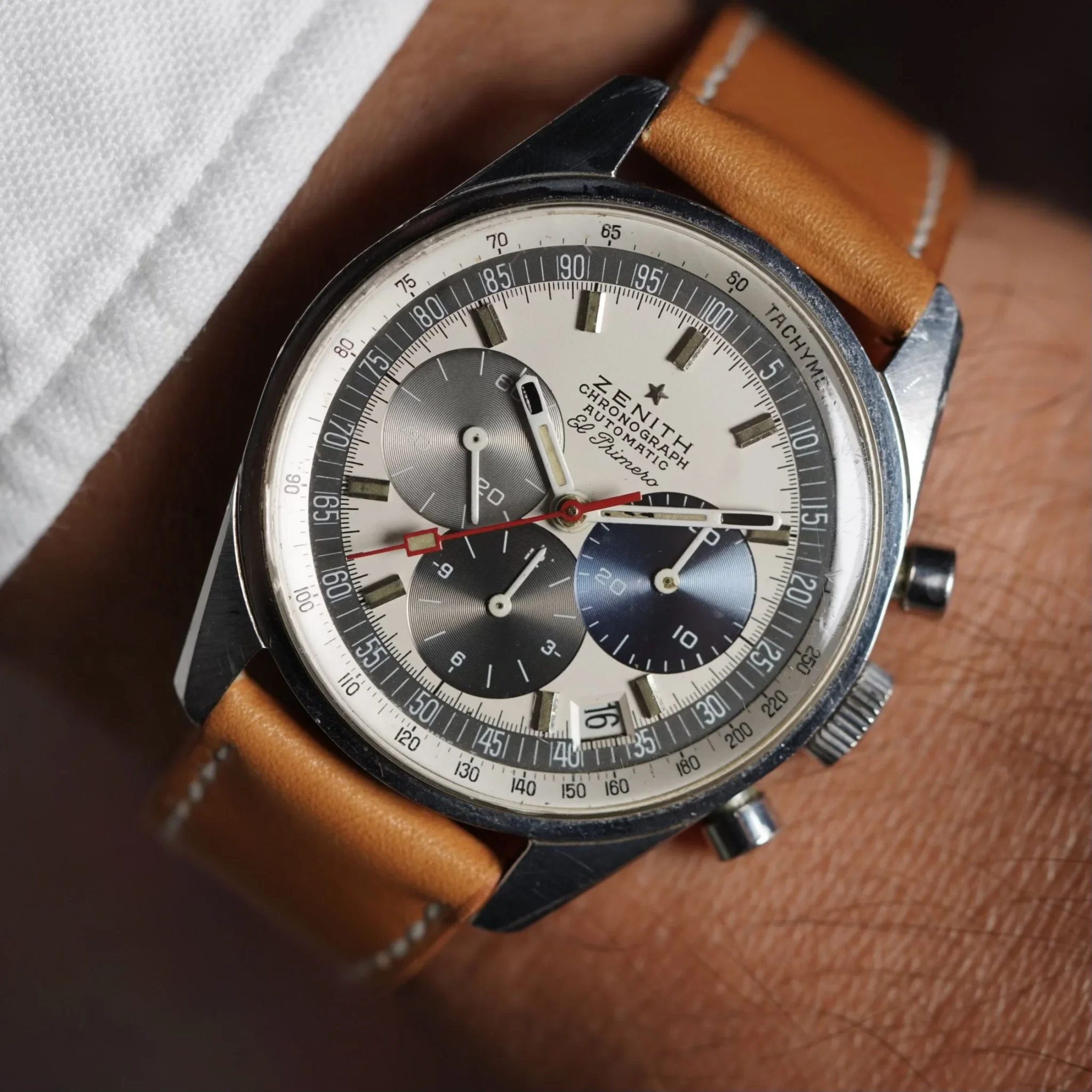
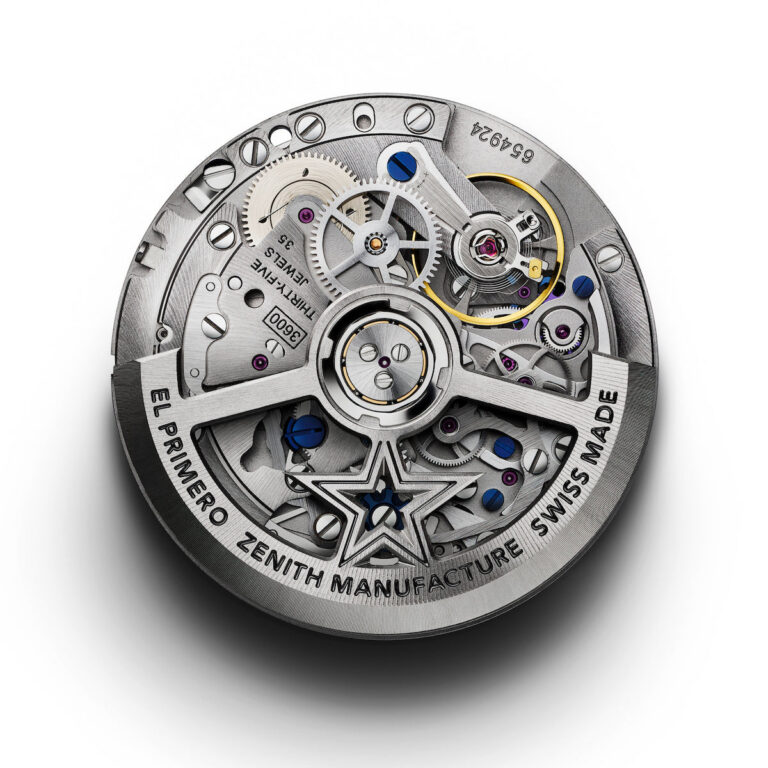
The Zenith El Primero A386 was announced on 10 January 1969 as one of the first automatic chronographs, alongside the Seiko 6139 and the Chronomatic group’s Calibre 11. It has a 38 mm stainless steel case, an acrylic crystal and pump pushers, and it carries the new calibre 3019 PHC, an integrated, column-wheel-free automatic chronograph movement beating at 36,000 vibrations per hour, or 5 Hz. That frequency allowed the chronograph to time to one-tenth of a second, which no other series-produced movement of the day could do.
Zenith began developing the movement in 1963 for its centenary and it was nearly lost when the parent company decided to switch to quartz in the 1970s; the movement survived because factory worker Charles Vermot hid the tooling in an attic. The A386’s tri-colour subdials (grey, blue and charcoal) and red central chronograph seconds hand are its signature, and the watch is dated between 3 and 4 o’clock with a tachymetre-free steel bezel.
Collectors regard the A386 as one of the key chronographs of its era, and good examples are valued above the more common later references. The movement is what the community admires, and it went on to power the Rolex Daytona from 1988 to 2000 in modified form. Zenith made a faithful A386 Revival in 2019 for the El Primero’s 50th anniversary, and the El Primero line itself remains in production, but the original 1969 A386 is no longer made.
Find your next watch, not just a brand.
Every watch on Watcheers has its spec sheet in Watch Explorer. Filter by size, material and budget to find the one that fits.