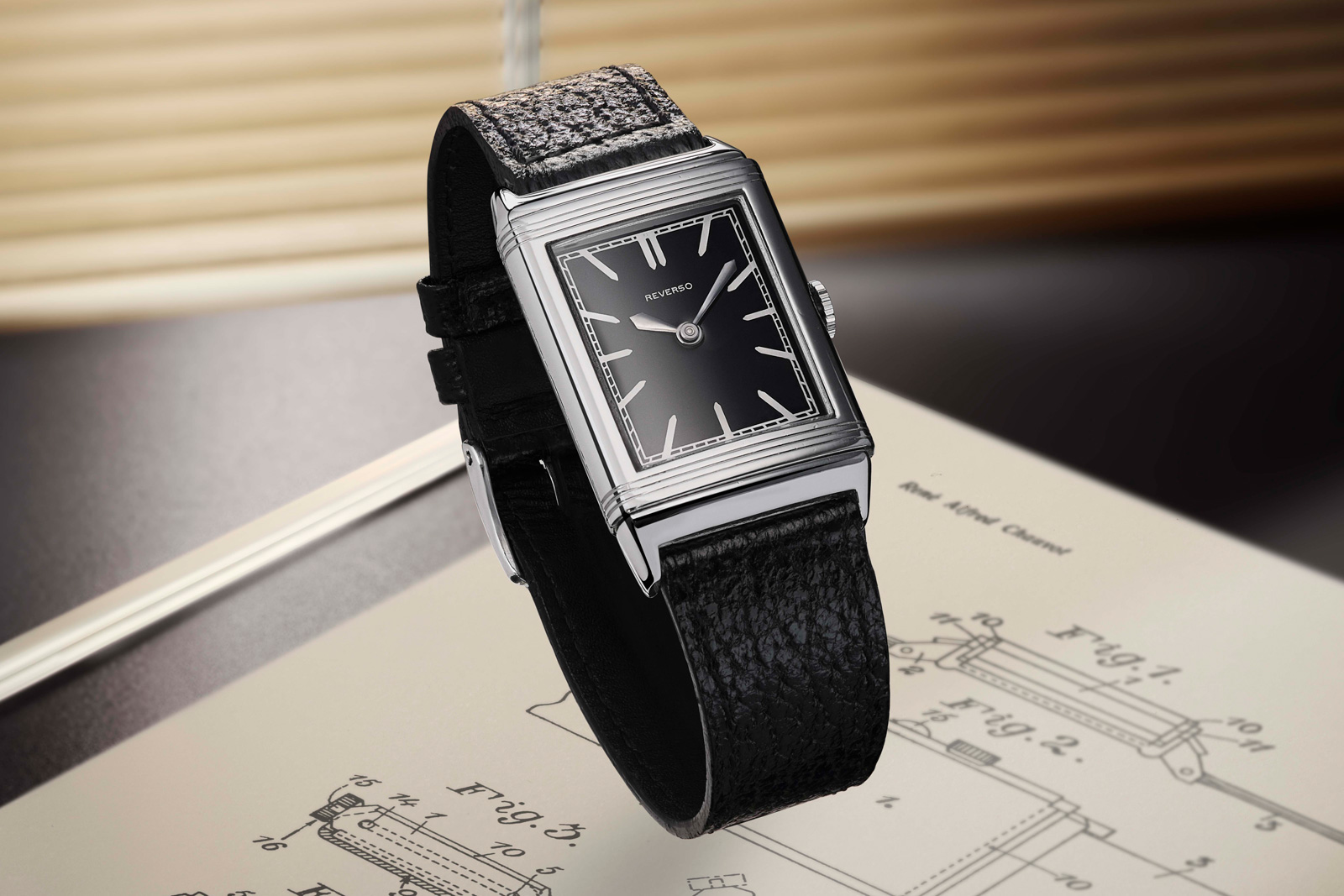
The Jaeger-LeCoultre Reverso dates from 1931, when French engineer René-Alfred Chauvot filed a patent on 4 March for a watch that could slide in its casing and flip over completely. The original case was made of 23 parts: a swivelling capsule pivots 180 degrees on a hinge, guided by parallel grooves and locked by spring-loaded pins, so the crystal can be turned to face the wrist and protected. The rectangular case has Art Deco triple gadroons at each end and a length-to-width ratio of about 1.618, the golden ratio. The first Reversos of 1931 used movements made by Tavannes, and LeCoultre’s own manually wound calibres 410 (small seconds) and 411 (central seconds) followed in 1933, measuring 17.85 x 24.55 mm, 3.35 mm thick, with 17 jewels and a frequency of 18,000 vibrations per hour.
The Reverso was born from a request by Swiss businessman César de Trey for a wristwatch able to survive polo, where mallets often broke watch crystals. De Trey bought the rights to Chauvot’s design in July 1931 and in November founded Spécialités Horlogères S.A. with Jacques-David LeCoultre to market it. Eight Reverso cases were also supplied to Patek Philippe in 1931 and 1932. The blank caseback soon became a canvas for engraving and enamel miniatures, including decorated gold pieces for Maharajahs. Sales faded by the early 1950s, and in 1972 Italian distributor Giorgio Corvo bought the last 200 cases, which sold within a month. A redesigned 55-part Reverso Classique appeared in 1985, followed by the Reverso 60ème in 1991.
The Reverso is widely seen as one of the world’s most famous shaped watches, often mentioned alongside the Cartier Tank. Monochrome attributes its success to being “a sports watch by day and an elegant one by night”, and collectors value its versatility and the room its reverse side offers for personal decoration. Critics are less enthusiastic about attempts to stretch it into a sports watch: SJX notes that the Reverso Gran’Sport and Reverso Squadra never quite took off and lacked the charm of the original proportions. The original 1931 Reverso is no longer produced, but the Reverso remains Jaeger-LeCoultre‘s signature collection, now powered by in-house rectangular movements, with complicated models such as the Duoface, Tryptique and Quadriptyque alongside the classic Tribute versions.
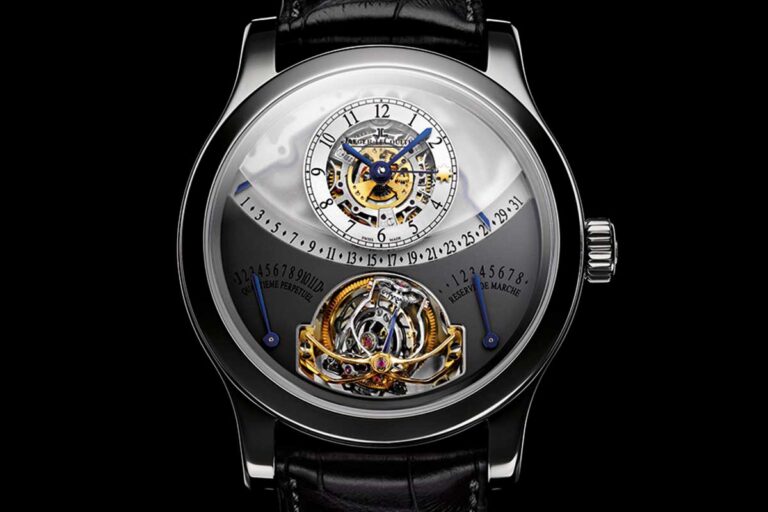
Jaeger-LeCoultre Gyrotourbillon 1 2004
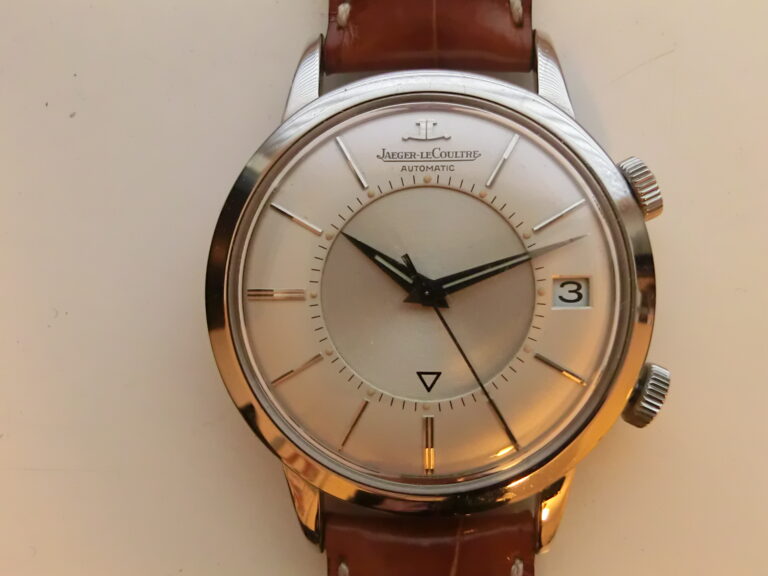
Jaeger-LeCoultre Memovox Polaris E855
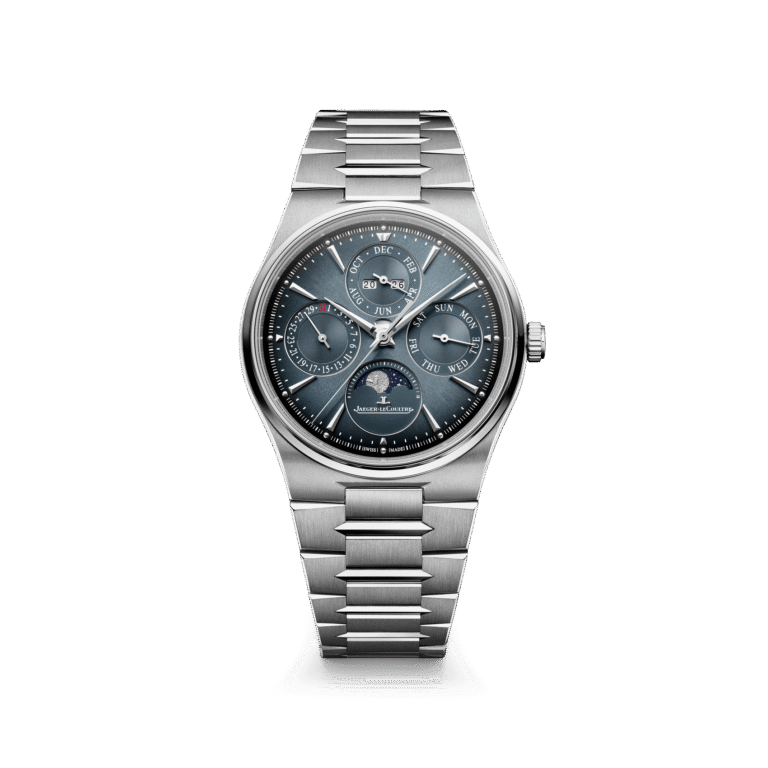
Jaeger-LeCoultre Master Control Chronometre Perpetual Calendar
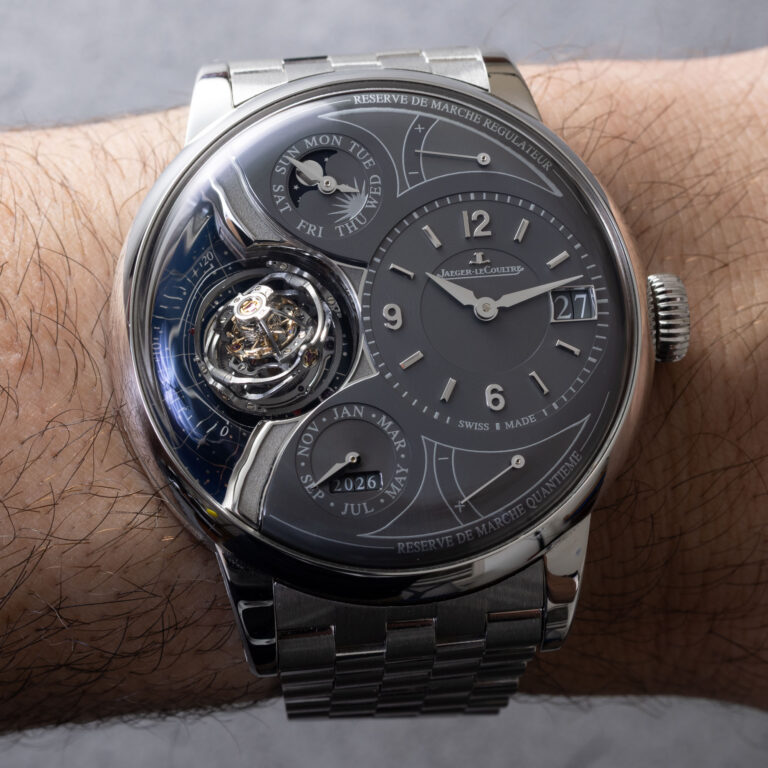
Jaeger-LeCoultre Duometre Heliotourbillon Perpetual Platinum
Find your next watch, not just a brand.
Every watch on Watcheers has its spec sheet in Watch Explorer. Filter by size, material and budget to find the one that fits.