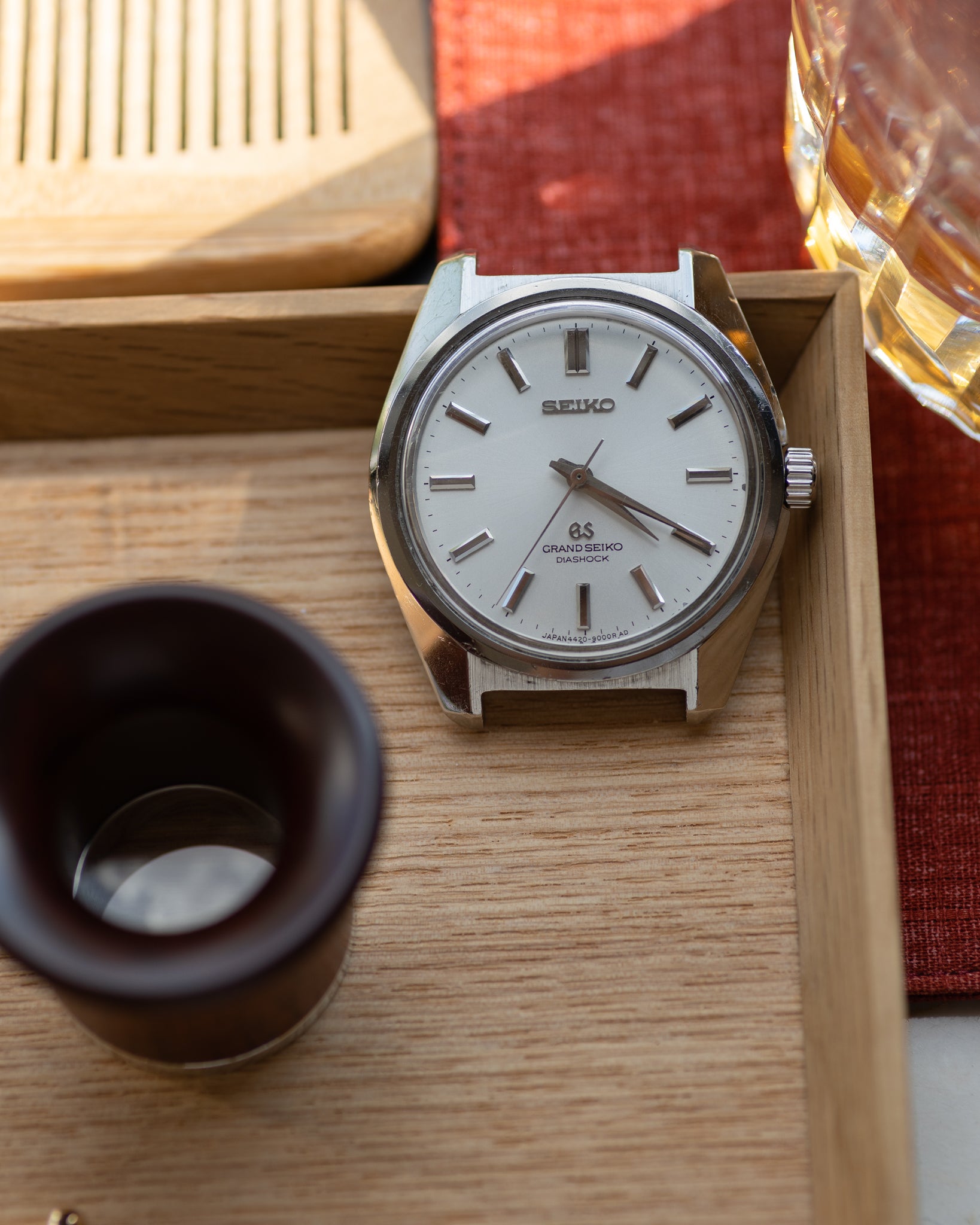
The 44GS arrived in March 1967 as reference 4420-9000, a 37 mm stainless-steel watch about 9 mm thick on 18 mm lugs, and it set out the design code that Grand Seiko still follows. Inside is the manually wound calibre 4420 — 27 jewels, 18,000 beats per hour, with Diashock shock protection — built by Daini Seikosha, the second of Seiko’s two watchmaking divisions. The watch’s proportions and finishing were derived from the 1964 King Seiko Chronometer, reference 4420-9990, which had already proved that a Japanese watch could meet Swiss chronometer standards.
What made the 44GS a landmark was not the movement but the case. Taro Tanaka, Seiko’s head of design, wrote a set of rules he called the Grammar of Design and applied them here: flat, mirror-polished planes, sharp unbroken edges where those planes meet, and no curve that did not have a structural job to do. The result is a case that reads as a set of geometric surfaces rather than a pebble, with facets that catch light along their full length. Those principles — wide flat lugs, a distinct case side, a cleanly defined bezel — have been applied to virtually every Grand Seiko since.
For decades the 44GS was a quiet reference known mainly to Japanese collectors, valued for its case work rather than its rarity. That changed as Grand Seiko became a global brand: the firm has reissued the design repeatedly, starting with the 2013 limited edition SBGW047 and continuing through several modern interpretations that keep the 1967 case geometry. Original 4420-9000 examples in strong, unpolished condition with intact dials are now scarce and expensive, and the reference number has become shorthand for the purest expression of Grand Seiko’s design language.
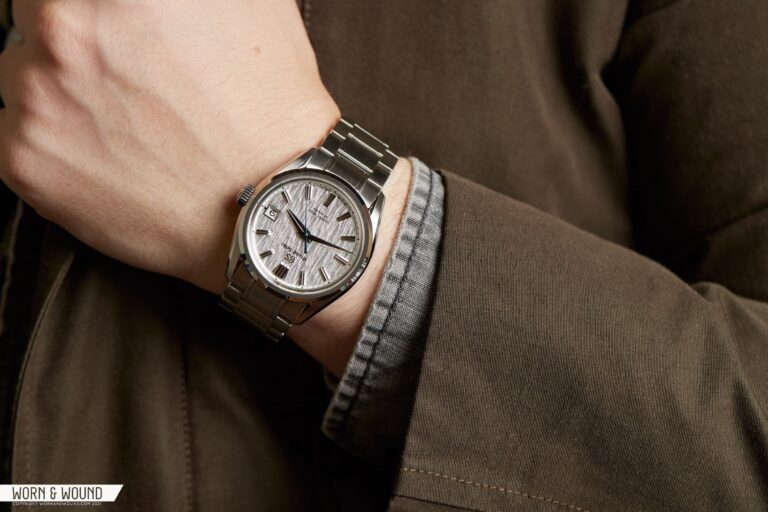
Grand Seiko White Birch SLGH005
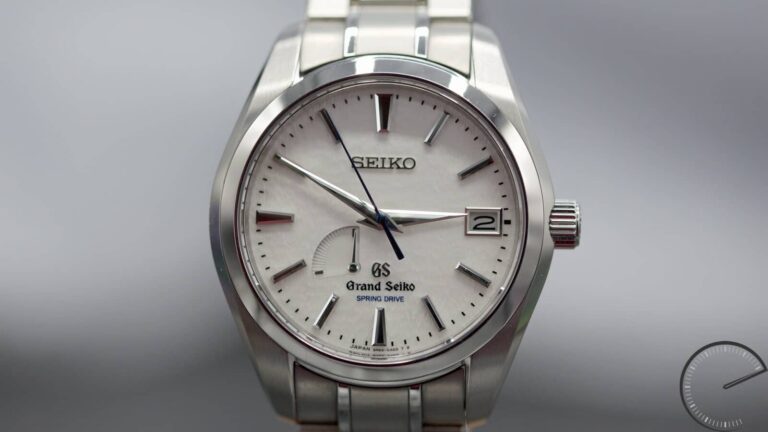
Grand Seiko Snowflake SBGA011
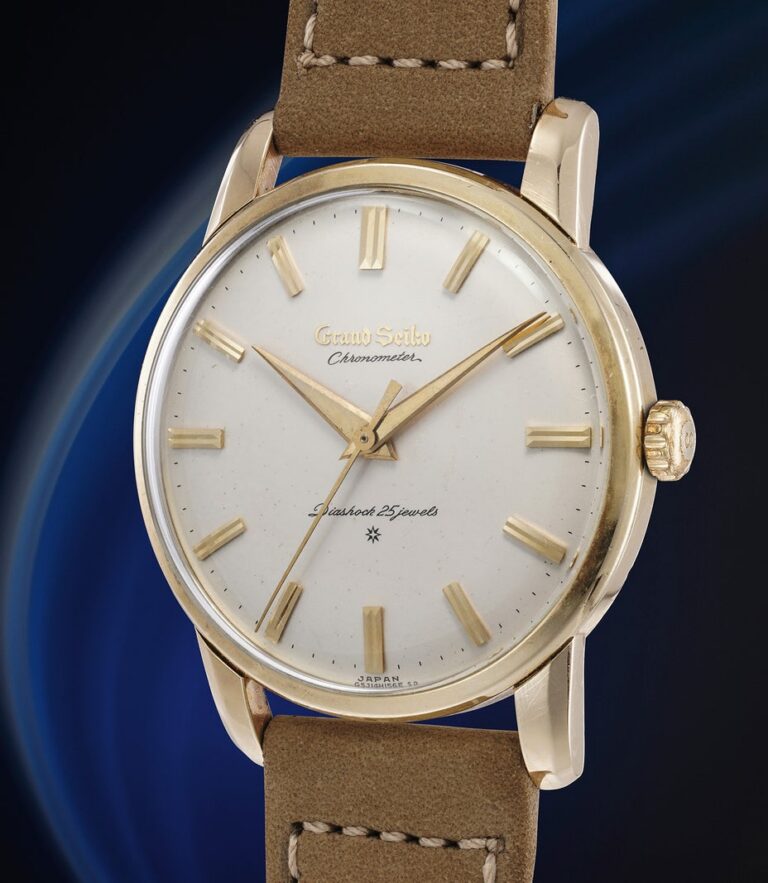
Grand Seiko 3180
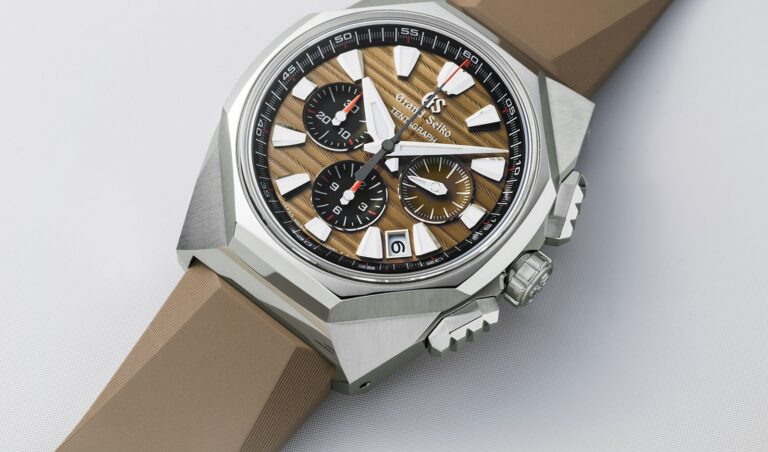
Grand Seiko Tokyo Lion Tentagraph SLGC009
Find your next watch, not just a brand.
Every watch on Watcheers has its spec sheet in Watch Explorer. Filter by size, material and budget to find the one that fits.