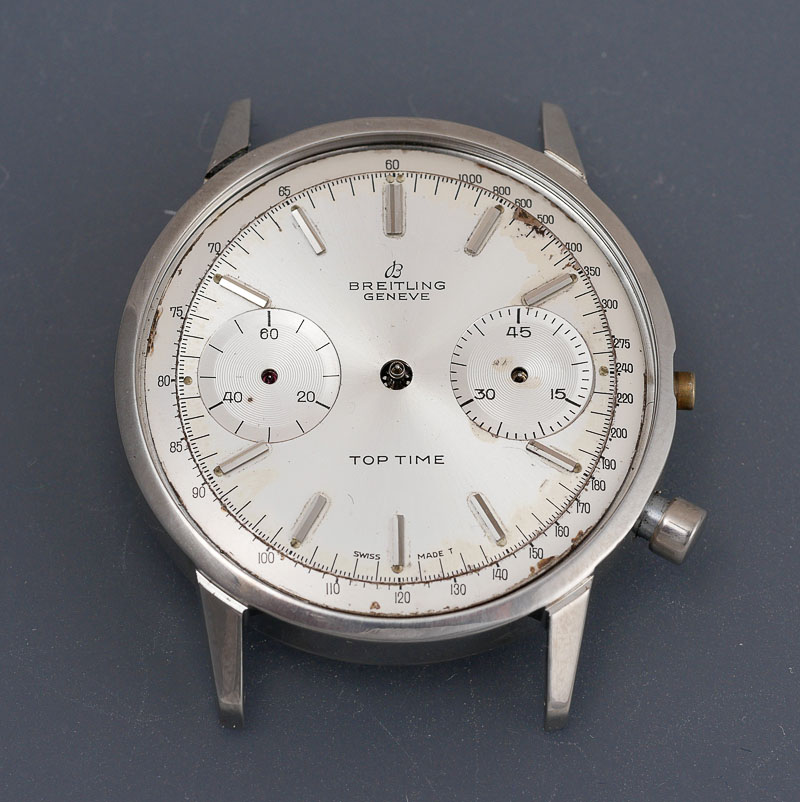
The Breitling Top Time arrived in 1964 as a compact, affordable chronograph: a round stainless steel case of about 38 mm, a clean two-register dial with a 45-minute counter at 3 o’clock and running seconds at 9, and a manual-winding cam-lever movement. Early examples used the Venus 188, which became the Valjoux 7730 after Valjoux absorbed Venus; the later cushion-shaped references such as the 2006 measured roughly 36.8 mm square and carried a tachymeter scale.
Willy Breitling pitched the model at buyers under 25, and the design reflects it: bright panda and reverse-panda dials, pared-back printing, and none of the Navitimer’s slide-rule complexity. Its place in popular culture came from reference 2002, the two-subdial version that Q-branch fitted with a hidden Geiger counter for Sean Connery in Thunderball (1965) — the first watch the films ever modified. That prop sold at Christie’s in 2013 for £103,875, decades after its owner bought it at a car-boot sale for £25.
Collectors long treated the Top Time as the value entry into vintage Breitling chronographs, and prices stayed modest until the Bond connection and the model’s revival pushed clean panda dials higher. The original line ran into the 1970s and was discontinued; Breitling brought the name back in the 2020s with 38 mm Top Time chronographs using modern B01 and B31 movements, so the badge is in production again even though the vintage references are long gone.
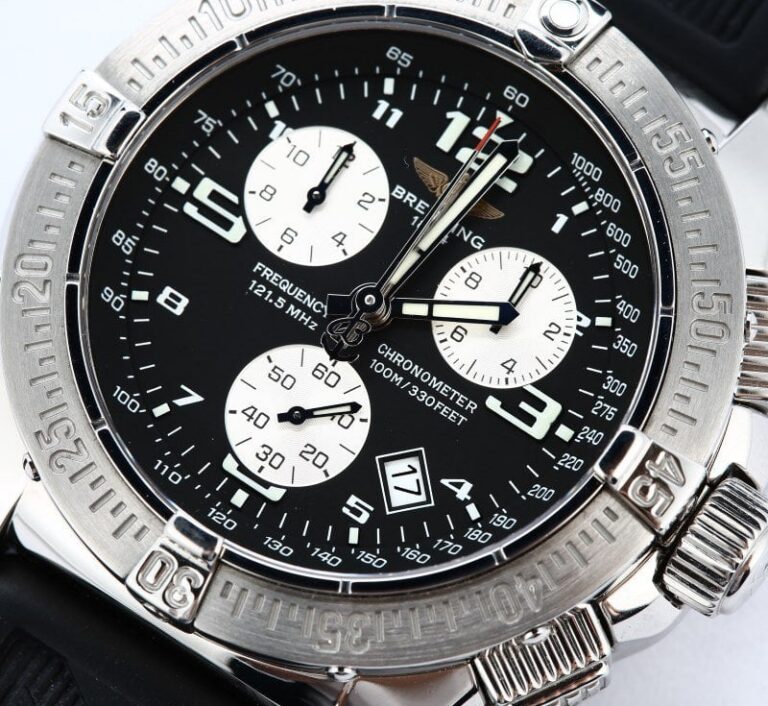
Breitling Emergency 1995
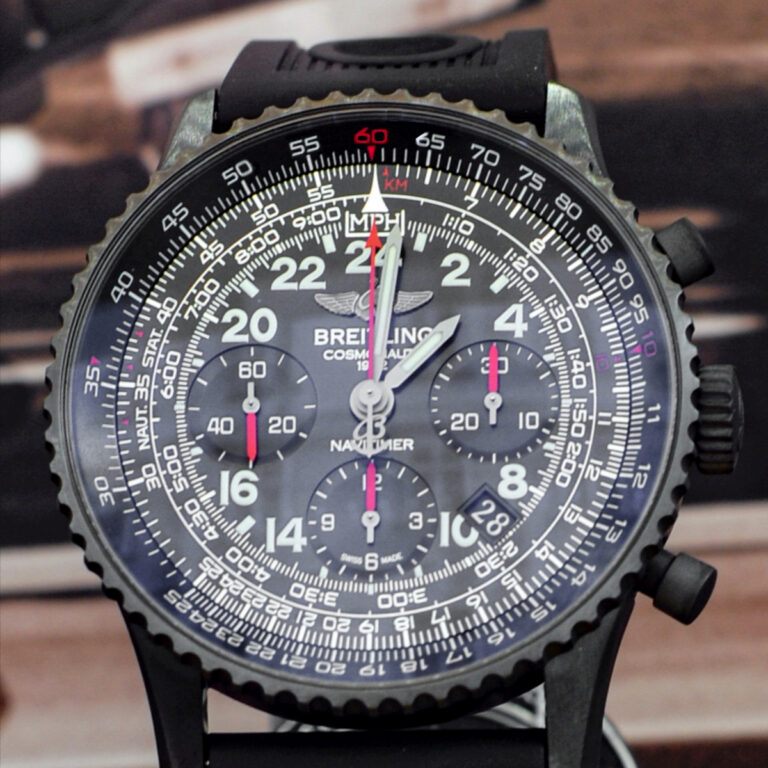
Breitling Cosmonaute 809
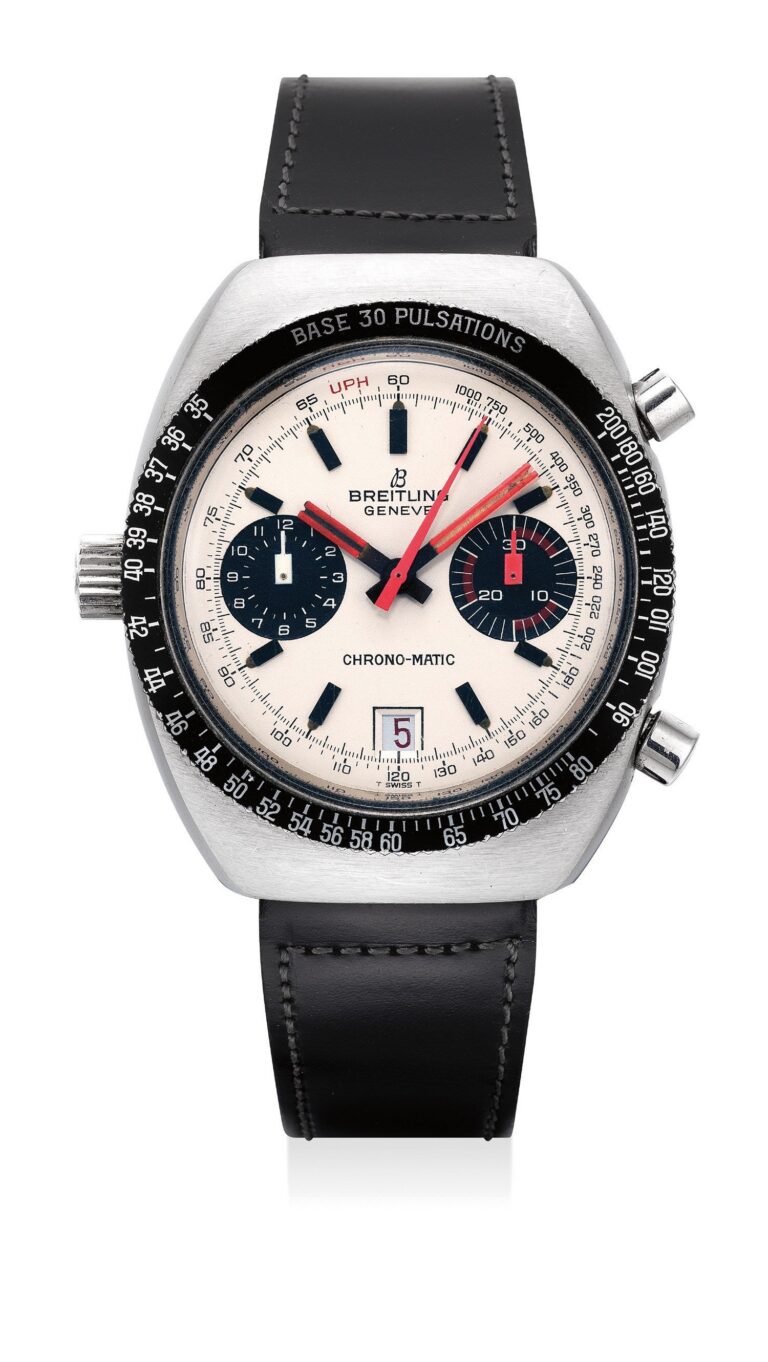
Breitling Chrono-Matic 1969
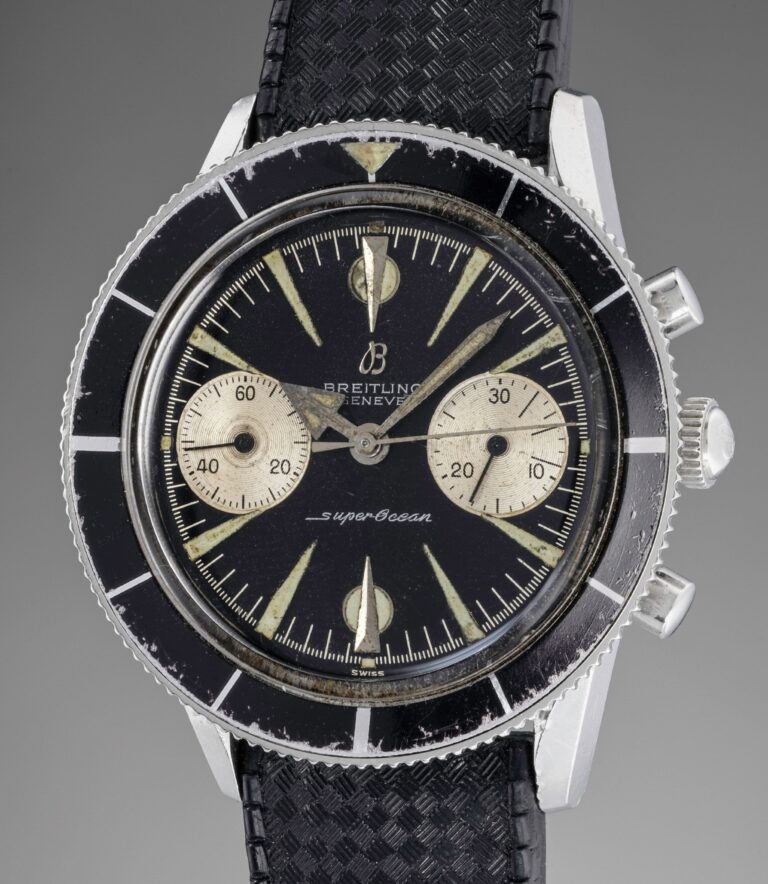
Breitling Superocean 1957
Find your next watch, not just a brand.
Every watch on Watcheers has its spec sheet in Watch Explorer. Filter by size, material and budget to find the one that fits.