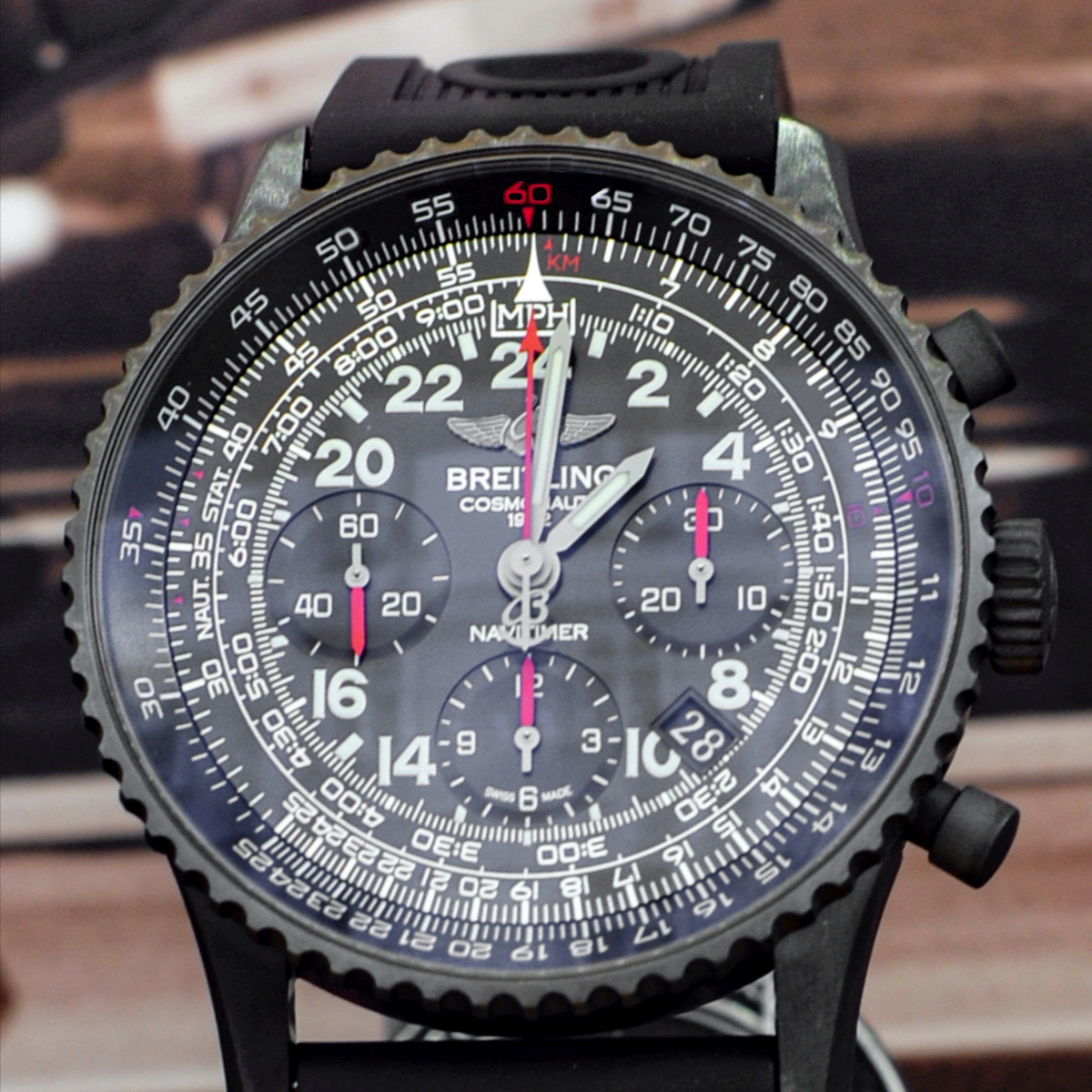
The Cosmonaute is the Navitimer rethought for space. In 1959 pilot Scott Carpenter asked Breitling for a chronograph that could tell day from night in orbit, and the answer was a 24-hour dial: the hour hand sweeps the face once a day, so noon and midnight never look the same. The reference 809 that followed in 1962 keeps the Navitimer’s slide rule, three registers and beaded bezel, in a steel case of roughly 42 mm powered by the hand-wound Venus 178 chronograph calibre.
Its signature is the dial layout: 24-hour Arabic numerals, luminous hands and a rotating slide-rule bezel for fuel, distance and rate calculations, all crowded into a black face that still reads as a professional instrument. Carpenter carried his on the Aurora 7 mission in May 1962, and Breitling has kept the 24-hour Cosmonaute in the catalogue ever since, the longest-running 24-hour chronograph in series production.
Collectors treat the early 809 as the serious version — Venus column-wheel movement, stepped lugs, applied with the “Cosmonaute” signature and a bridge plate engraved with the owner’s name on some examples — while later references moved to the Valjoux 7740 and eventually self-winding calibres. The reference 809 itself is long discontinued and highly sought after; the Cosmonaute name continues today in modern limited editions, so the vintage piece remains the one space-watch collectors argue about.
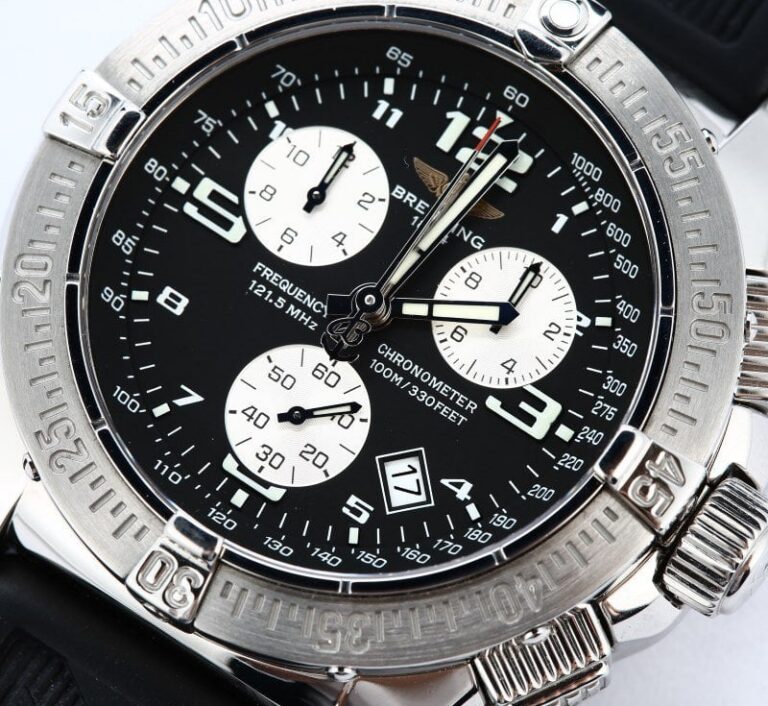
Breitling Emergency 1995
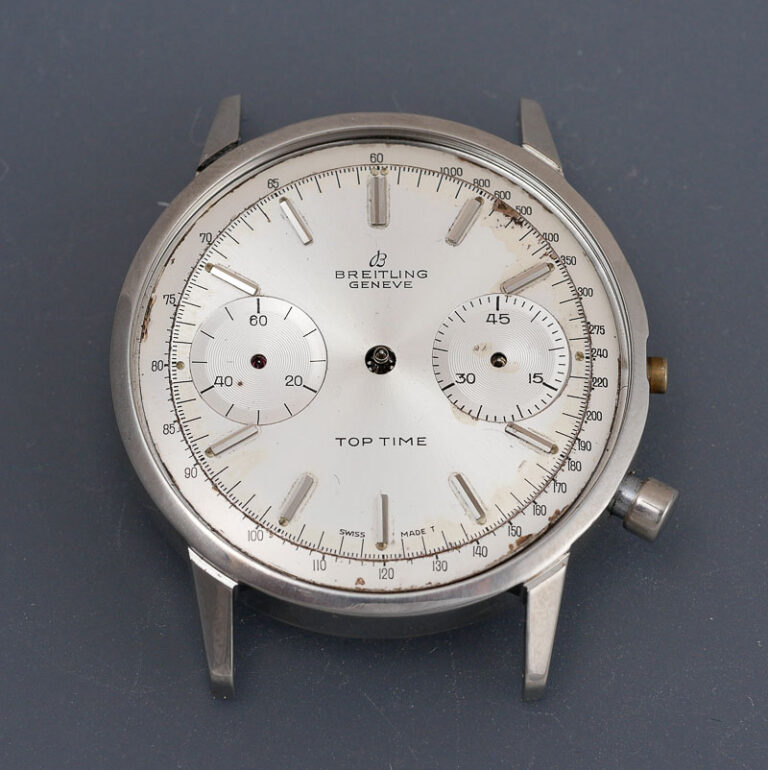
Breitling Top Time 1964
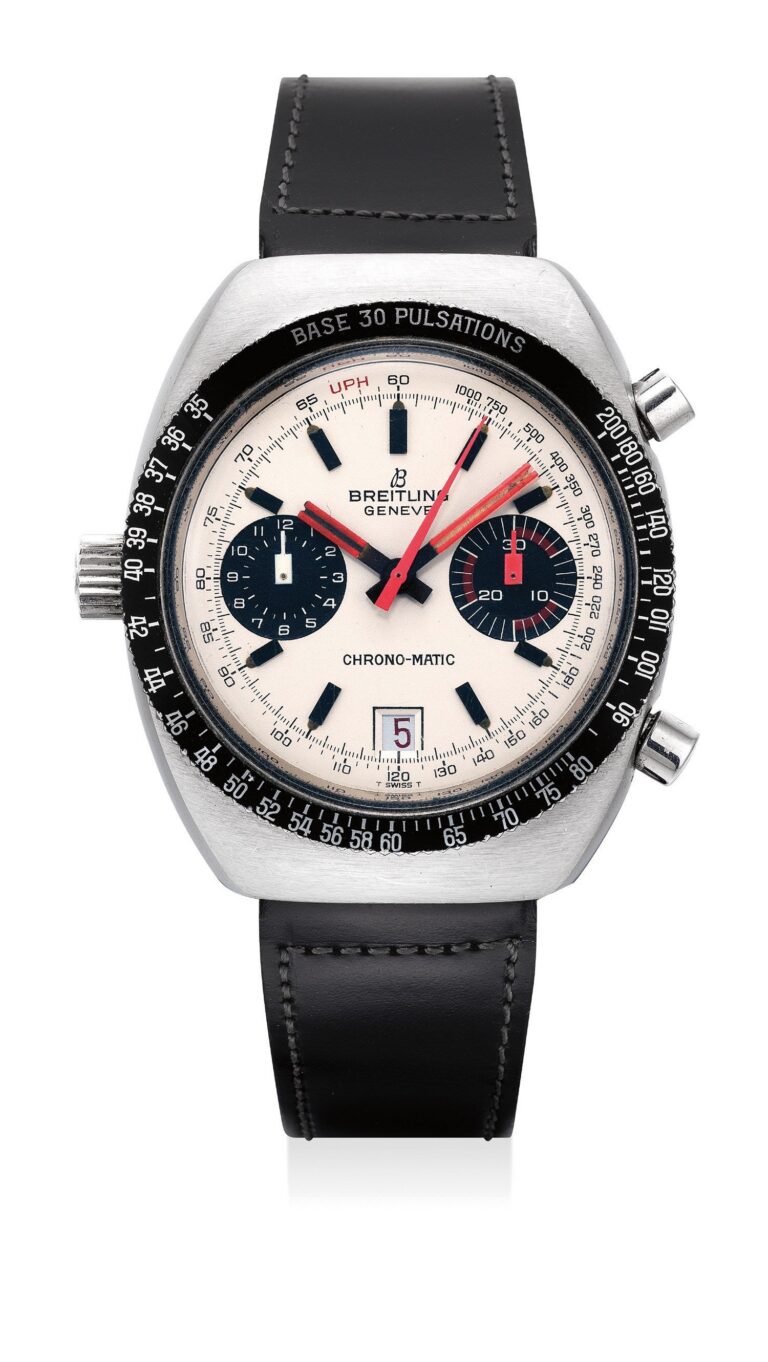
Breitling Chrono-Matic 1969
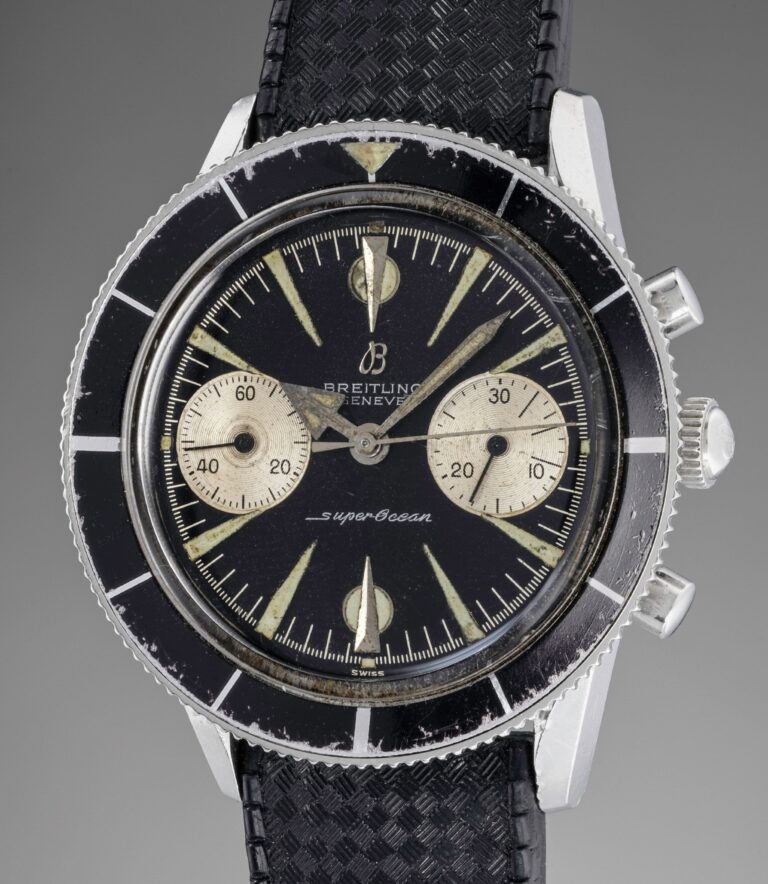
Breitling Superocean 1957
Find your next watch, not just a brand.
Every watch on Watcheers has its spec sheet in Watch Explorer. Filter by size, material and budget to find the one that fits.