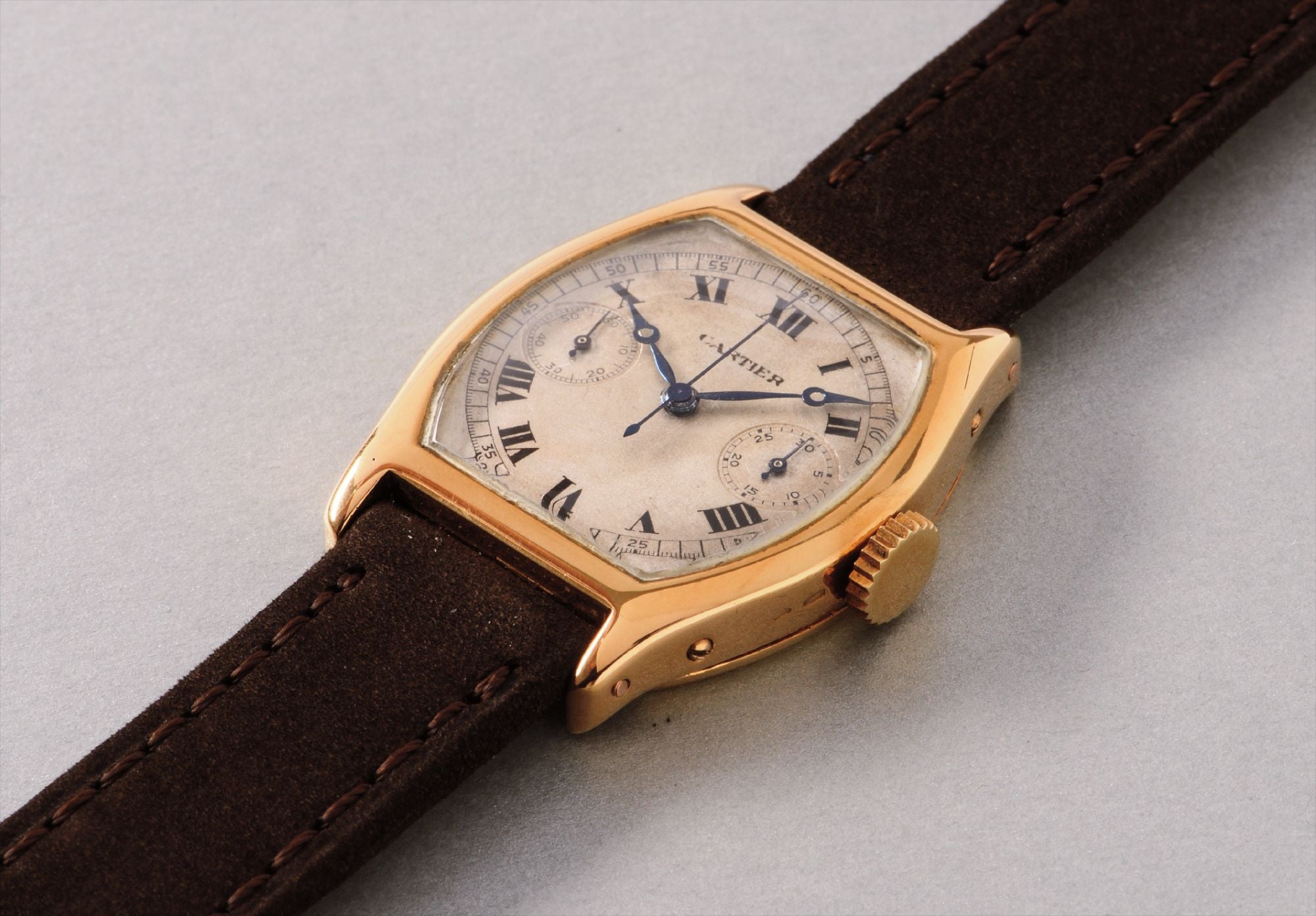
The Cartier Tortue was designed by Louis Cartier in 1912. Its name is French for tortoise, and its barrel-shaped case, with softly rounded lines and curvature on every side, recalls a turtle’s shell seen from above; Phillips describes it as a modified tonneau with a shell-like center, and Cartier collection director Lepeu has summed it up as what happens “when a circle meets a rectangle.” The 1912 records describe a “platinum bottom gold watch in a so-called turtle shape,” and from the start examples were embellished with enamel, diamonds and other precious stones on the bezel and lugs. The original was a hand-wound wristwatch made in subtly varying proportions and sizes, with no single catalogue reference. It matters historically as one of Cartier‘s first major shaped watches, following the Santos of 1904 and the Tonneau of 1906.
The Tortue quickly became one of the maison’s most popular wristwatches, worn by both men and women. Its shape left room for a larger movement than the Tank or the Santos, which made it one of the first Cartier wristwatches with a complication: in 1928 the Tortue became Cartier‘s first chronograph, a single-button (monopoussoir) model in which the crown starts, stops and resets the chronograph, and a yellow gold Tortue minute repeater appeared the same year. Movements for these pieces were supplied by the European Watch Company, a Paris venture between Cartier and Edmond Jaeger. The Tortue Monopoussoir was revived in the Collection Privée Cartier Paris with the calibre 045 MC developed by THA (Denis Flageollet, Vianney Halter and François-Paul Journe), and in 2024 the Cartier Privé series brought back the Tortue with the 430 MC hand-wound calibre and a Monopoussoir chronograph with the 4.3 mm calibre 1928 MC in a 43.7 x 34.8 x 10.7 mm case, limited to 200 pieces per version.
Collectors regard the Tortue, and especially the Monopoussoir, as one of the most iconic and coveted designs in the Cartier collector community, and interest reached a high point around the 2024 Privé release. Vintage examples are rare: Phillips noted that only a handful of single-button Tortue à Pattes chronographs had appeared at auction in a decade, and a 1929 18K yellow gold example sold at Phillips Geneva for CHF 77,500 against an estimate of CHF 40,000 to 60,000, while another early monopusher sold in 2021 for CHF 189,000. Writers praise the clean lines of the single-button layout; the trade-off is that the most desirable versions are rare, costly and made in small numbers. The original 1912 watch is no longer produced, but the Tortue itself has stayed in the Cartier catalogue: the current Tortue collection offers mini, small and large models, and the limited Cartier Privé editions continue the Monopoussoir line.
Cartier Pasha 1985
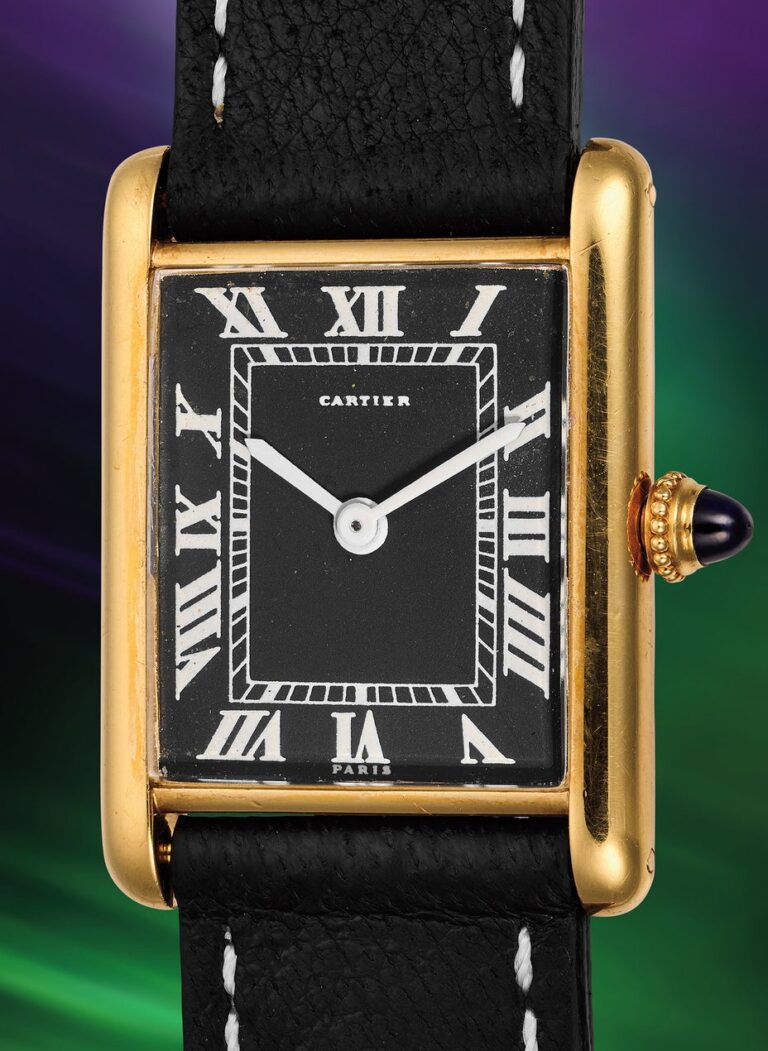
Cartier Tank Louis Cartier 1922
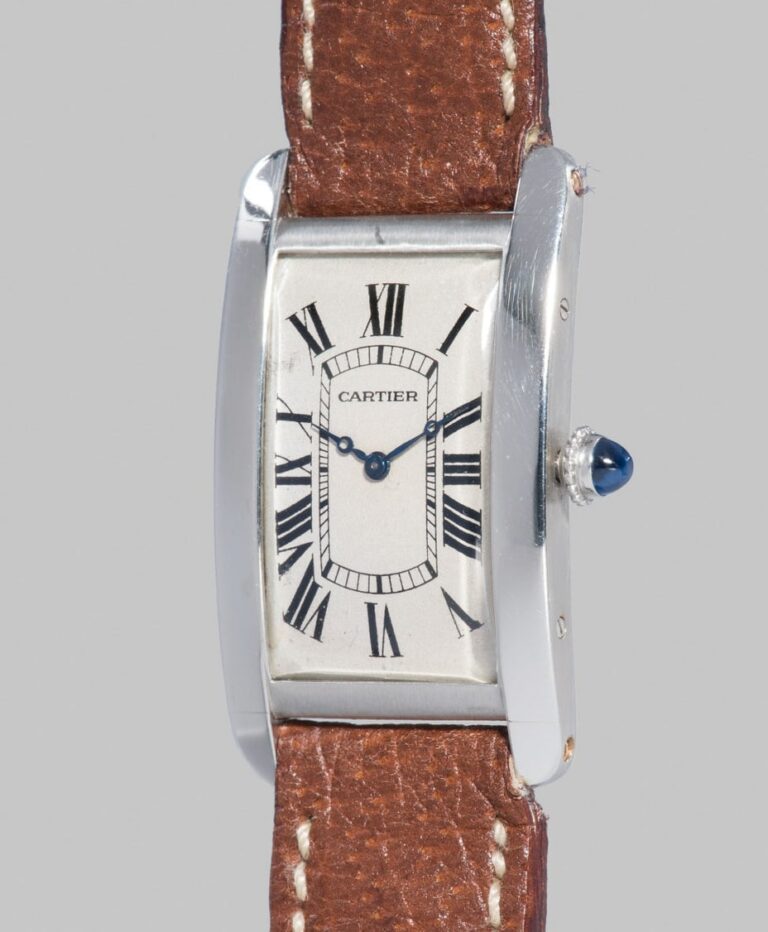
Cartier Tank Cintrée 1921
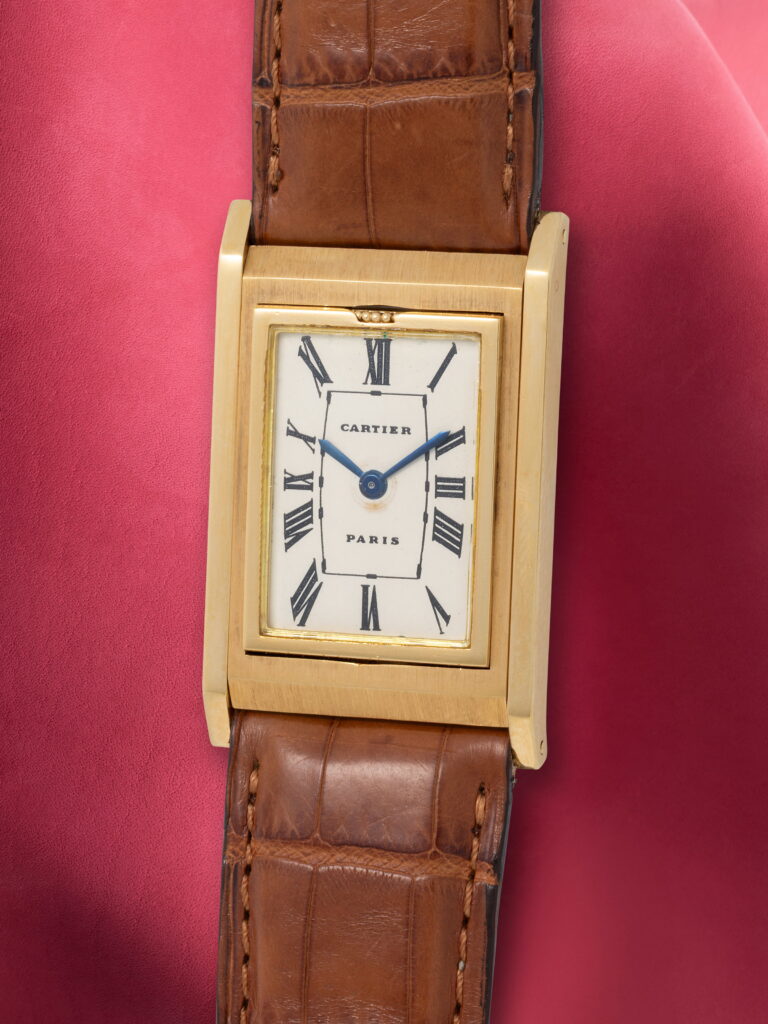
Cartier Tank Basculante 1932
Find your next watch, not just a brand.
Every watch on Watcheers has its spec sheet in Watch Explorer. Filter by size, material and budget to find the one that fits.