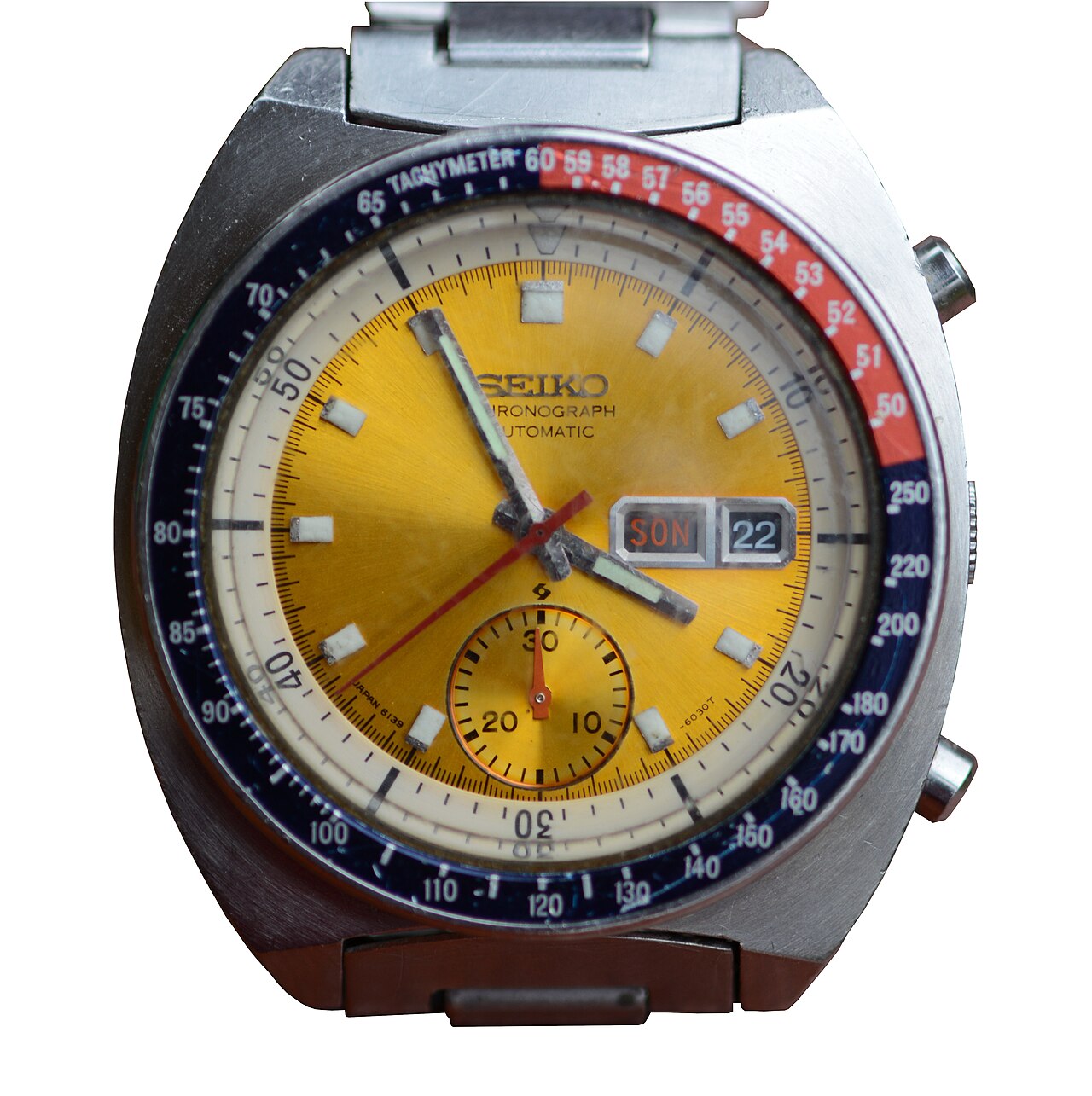
Seiko 6139 Pogue 6139-6002
6139 · 6139 Chronograph
- Crystal
- Acrylic
The Seiko 6139-6002, known as the “Pogue”, is built around calibre 6139, which Seiko launched in 1969 and describes as one of the world’s first automatic chronographs. The movement measures 12 lignes (27.0 mm) and 7.2 mm high, beats at 21,600 vibrations per hour, runs on 17 or 21 jewels and offers about 45 hours of power reserve. It combines a column wheel with a vertical clutch, a pairing Seiko notes is now considered a requirement for high-grade chronographs. Functions are hours and minutes, a central 60-second chronograph hand, a 30-minute counter and a quickset day-date set through the crown; there is no running seconds. The 6002 reference uses a cushion-shaped stainless steel case, which dealer listings measure at 40 to 41 mm, with a blue and red “Pepsi” tachymeter bezel and a recessed crown.
The nickname comes from Colonel William Pogue, an astronaut and former Thunderbirds pilot. He bought a yellow-dial 6139 in 1972 and took it on the Skylab 4 mission in 1973 as a personal watch, alongside his issued Omega Speedmaster. He reportedly preferred the Seiko for timing engine burns. The watch was not part of his official kit, and the story only became widely known years later, which has led to it often being called the first automatic chronograph worn in space. The 6139 family was made from 1969 to 1979 in several case styles and dial colours, including yellow, blue and silver, and later “B” movements received a revised switching mechanism. A dual-language day wheel, such as English and Spanish, is common on these pieces.
Collectors regard the Pogue as one of the most important vintage Japanese chronographs, valued for its technical firsts, its space history and an accessible price compared with Swiss rivals of 1969. Pogue’s own watch sold at auction in 2008 for $6,000. Once the Skylab photos became known, prices for 6139 pieces rose sharply and an aftermarket parts network grew around them, so buyers are advised to check dials and bezels for replacements. The debate over which 1969 automatic chronograph came first, between Seiko, Zenith and the Chronomatic group, depends on how “first” is defined. The original 6139-6002 is no longer produced; Seiko marked the 50th anniversary of calibre 6139 with a 2019 Prospex limited edition powered by the modern calibre 8R48.
Find your next watch, not just a brand.
Every watch on Watcheers has its spec sheet in Watch Explorer. Filter by size, material and budget to find the one that fits.