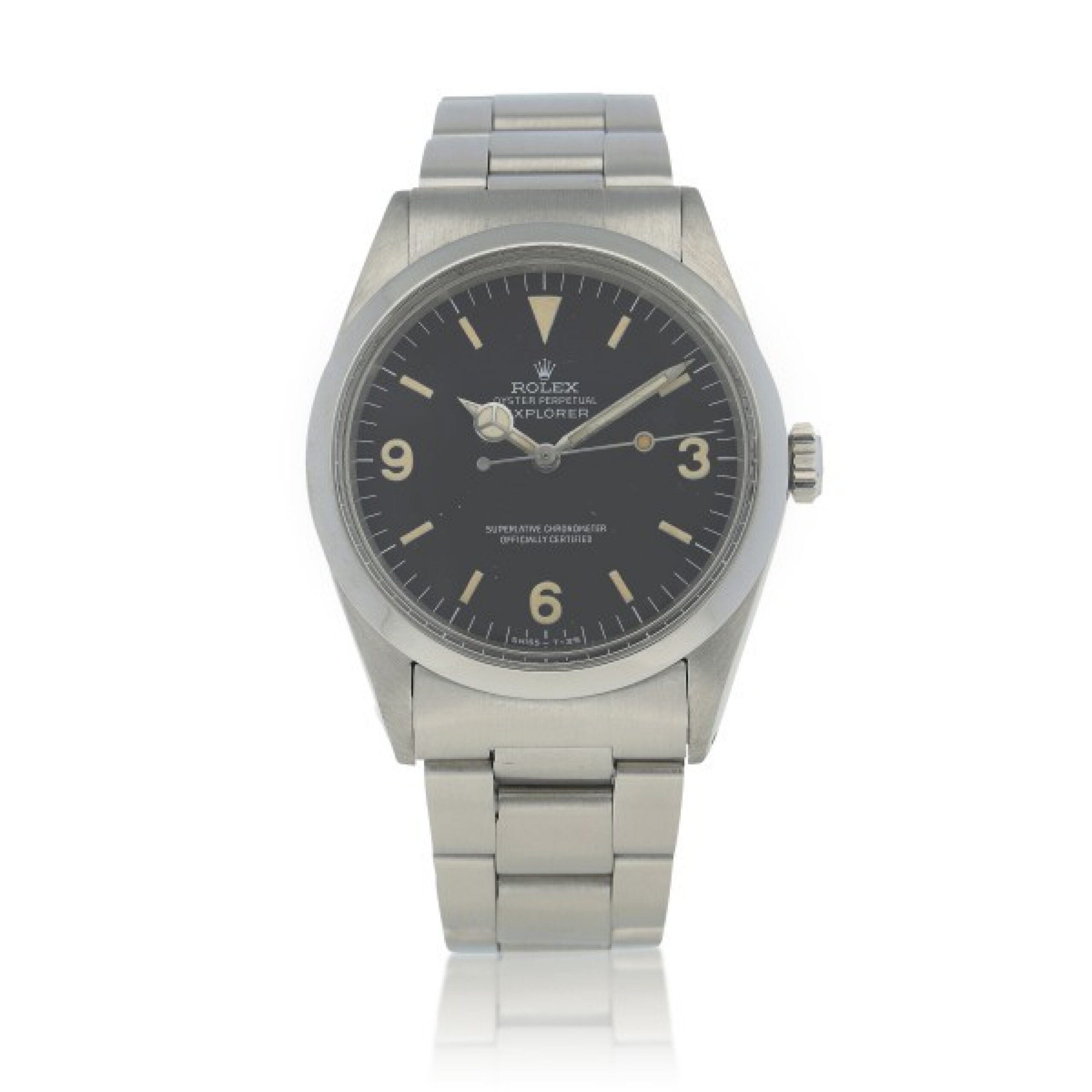
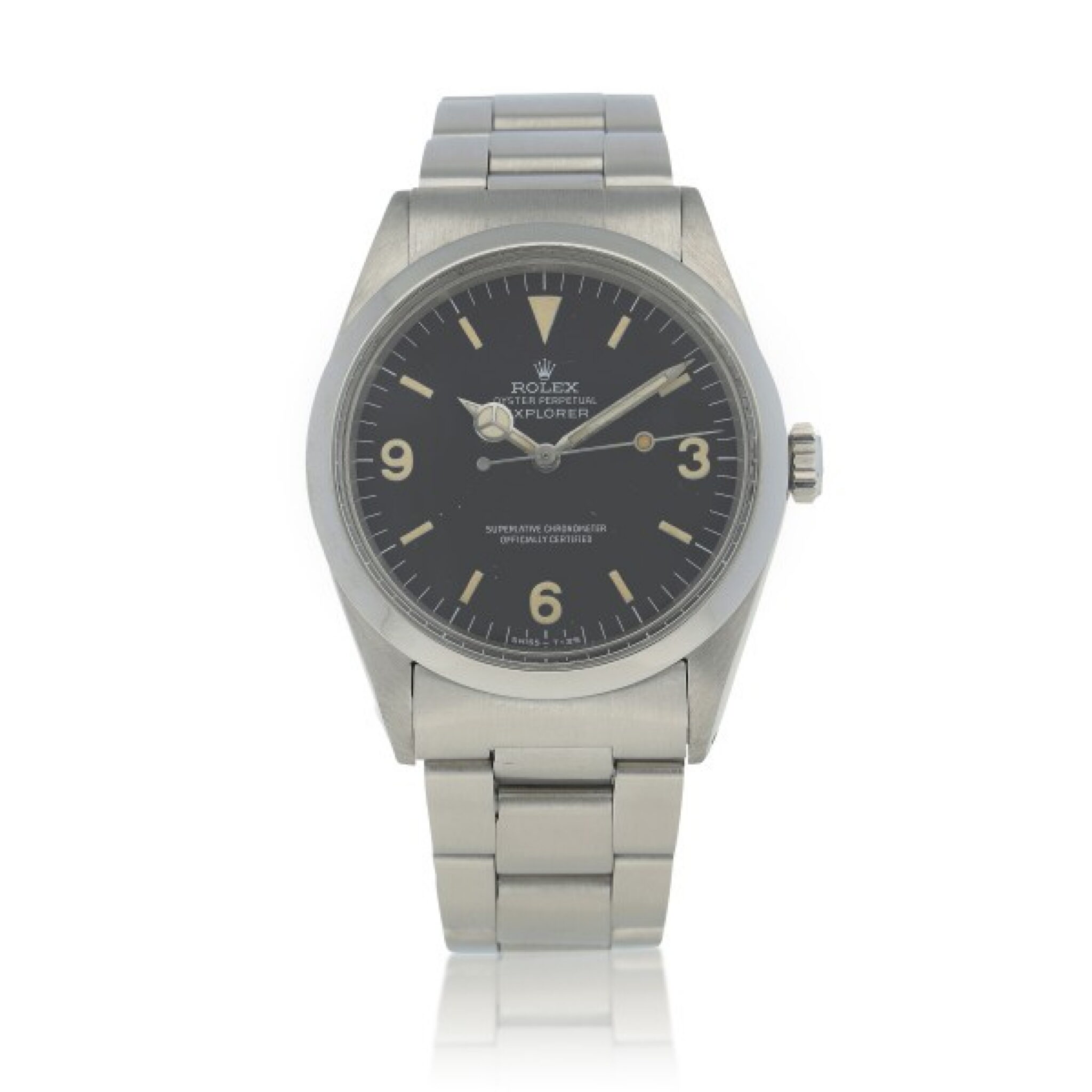
The reference 1016 is the Explorer most people mean: a 36 mm steel Oyster case, water-resistant to 100 metres, an acrylic crystal, and the black dial with the 3-6-9 luminous numerals and the characteristic broad hands that Rolex settled on for its mountain watch. It replaced the 6610 around 1963 and stayed in the catalogue until 1989, running the calibre 1560 in early examples and the higher-beat calibre 1570 from the mid-1960s onward.
Nothing about it is complicated, and that is the design: no date, no rotating bezel, a smooth steel bezel and a dial that has to be readable in bad light at altitude. Across nearly three decades the details drifted — glossy gilt dials gave way to matte, then back to gloss; the crown guards stayed slim; the bracelet options widened — which is why 1016 collectors talk in dial types rather than references.
The Explorer has always been the quiet Rolex, and the 1016 is its purest form: less hyped than the Submariner, less expensive than a Daytona, and treasured by people who like a watch that says nothing. It is long discontinued, replaced by the 14270 in 1989 and now represented by the modern 36 mm Explorer, but the 1016 is the version the community treats as the reference point for the whole line.
Find your next watch, not just a brand.
Every watch on Watcheers has its spec sheet in Watch Explorer. Filter by size, material and budget to find the one that fits.