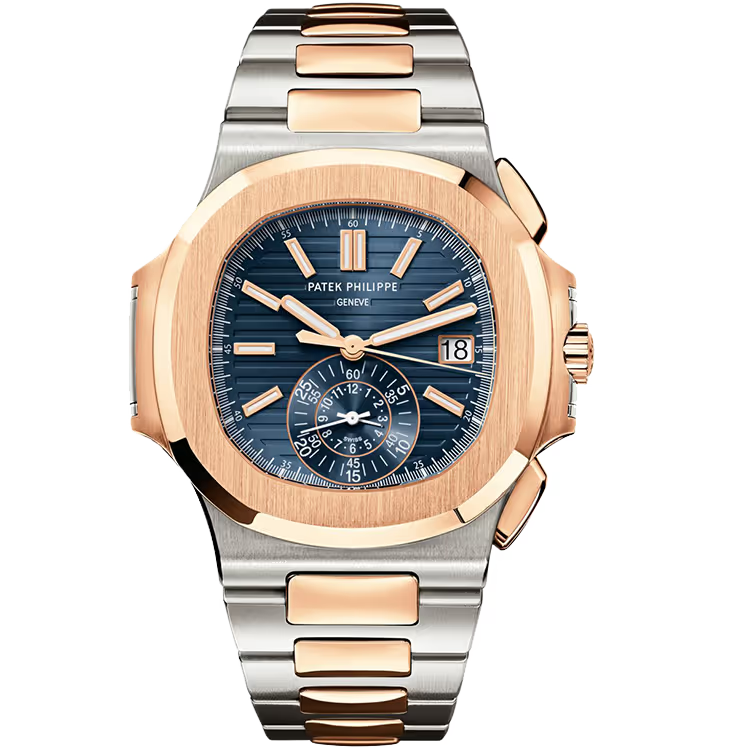
The Patek Philippe Nautilus reference 5980/1AR-001 is a high-end sports chronograph that features a 40.5mm case constructed from a combination of stainless steel and 18k rose gold. This two-tone aesthetic extends to the integrated bracelet, which utilizes rose gold for the center links and stainless steel for the outer links. The watch is defined by its signature rounded octagonal bezel and a blue gradient dial with horizontal embossing, adorned with gold-applied hour markers and hands treated with luminescent coating for enhanced legibility. It is equipped with a sapphire crystal case back that reveals the intricate finishing of the movement and is water-resistant to 120 meters.
At the heart of the timepiece is the in-house Caliber CH 28-520 C, a self-winding mechanical movement that provides a power reserve of approximately 45 to 55 hours. The watch features a sophisticated flyback chronograph complication, allowing the wearer to reset the timer without stopping it first. A notable design element is the large monocounter at 6 o’clock, which integrates both 60-minute and 12-hour totalizers into a single sub-dial to maintain a clean and symmetrical appearance. Additionally, a date aperture is positioned at 3 o’clock, and the movement utilizes a vertical clutch system that allows the chronograph hand to run continuously as a sweep seconds hand without causing excessive wear.
General reviews of the 5980/1AR-001 often praise its bold wrist presence and the successful execution of the two-tone design, which collectors frequently describe as a harmonious blend of luxury and sportiness. The blue gradient dial is widely cited as a highlight for its dynamic response to lighting conditions and its rich hue. While the watch is celebrated for its technical refinement and impeccable hand-finishing, some reviewers note that the case is significantly thicker than the time-only Nautilus models, which may affect wearability for some. Common minor criticisms include the lack of a quick-set date function through the crown, necessitating the use of a recessed pusher on the side of the case, and the relative stiffness of the chronograph pushers compared to manual-wind alternatives.